Entrevista
Interview
por Adriana Rosenberg
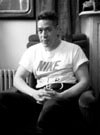
En anticipación de la retrospectiva de Andres Serrano en las salas de la Fundación Proa, durante los meses de julio - agosto de l997, Arturo Carvajal y yo lo visitamos en su casa de Brooklyn una calurosa tarde de junio.
Adriana Rosenberg: Los críticos han relacionado tu trabajo con candentes problemáticas políticas y le adjudican a tus obras contenidos sociales.
Andres Serrano: Mi trabajo ha sido politizado y la
crítica le ha atribuido un contenido político
mayor que el que considero que tiene. Mi obra se enmarca en
un contexto social, entonces es inevitable que se hagan esas
asociaciones, creo que son pertinentes.
Efectivamente el trabajo tiene una dimensión
política y social, pero no es algo
estratégicamente planificado. No participo en debates
o diálogos políticos y no creo que me
corresponda a mí intervenir al respecto.
Se ha citado mi trabajo a propósito de un determinado
debate político, relativo a la censura en
relación con el arte. Y aunque yo me he sentido
involucrado en este proceso, siempre intenté mantener
una cierta distancia.
Creo que los críticos a veces aciertan y a veces
construyen ideas. Me atribuyen intenciones que no tengo, por
ejemplo, cuando asocian mi trabajo con problemáticas
como el SIDA, pero no es mi intención.
En general, me siento cómodo con los significados que
la gente atribuye a mi trabajo.
AR: Tus obras de principios de los Ochenta, más específicamente la serie de los fluidos, son construcciones muy abstractas. A posteriori en Ku Klux Klan o en la serie de los Nómades vas acercándote a una figuración, a un cierto realismo. Pareciera que recorrieras el camino inverso de la historia del arte.
AS: Es como un círculo. Creo que no hay un
límite preciso entre abstracción y
figuración, es un ir y venir. En las obras abstractas
pretendía imitar a la pintura, el trabajo figurativo
me acercó más al lenguaje de la
fotografía.
Inicialmente mi trabajo era muy narrativo, relataba y
realizaba obras produciéndolas con modelos, como por
ejemplo en Heaven and Hell, una mujer atada y sangrando.
Dos años más tarde, hice la foto Milk,Blood,
una neta abstracción y comencé la serie de los
fluidos. Este punto de mi búsqueda, fue para
mí una manera de simplificar y reducir
imágenes. En otras palabras para mi Heaven and Hell
está reducido en Milk, Blood.
Luego de varios años de investigación con los
fluidos y las construcciones más abstractas,
decidí volver a un tipo de representación. Fue
entonces que realicé la serie de los Nómades y
la del Ku Klux Klan y La Morgue, series de trabajos donde no
interviene la producción.
AR: En tus obras encontramos citas o referencias muy explícitas a la historia del arte, a pintores o ciertos movimientos históricos...
AS: Sí, podría decir que en la serie de los fluidos me acerqué a la abstracción, más específicamente a Mondrian.
AR: ¿Y en la serie de los monocromos a Malevich?
AS: No, hay una sugerencia de Malevich en Milk
Cross.
En las obras de La Morgue, si bien no hay explícitas
referencias a la historia de la pintura, efectivamente hay
ciertas imágenes que se asocian a Bellini, al
Caravaggio, como en la obra Knifed to Death I y II al Juicio
Final. Algunos de esos retratos me recuerdan a pinturas
sobre el Cristo muerto y los trabajos de La Historia del
Sexo a Boticelli.
AR: Alguna vez dijiste que no te interesaba investigar las técnicas de la fotografía y que la utilizabas como los pintores utilizan la tela. ¿Te parece que la abstracción es más pictórica y la figuración más fotográfica?
AS: Prefiero hablar de mi trabajo como arte, sin
discriminar entre fotografía y pintura. Por eso, me
resisto a que me llamen fotógrafo, si bien me parece
que el trabajo que hice después de la serie de los
fluidos, es más fotográfico.
Monocromos como Blood o Milk funcionan, para mí,
mucho más como una pintura abstracta que como
fotografías. Las series posteriores como
Nómades, o La Morgue me parecen más
fotográficas porque hay modelos y son reales,
generalmente son retratos y están tomados ahí,
sin producción.
AR: O sea que el lenguaje de la pintura es una elaboración y el lenguaje fotográfico retrata una realidad, una instantaneidad de la imagen. ¿Cómo se organizan esas imágenes?
AS: Mas allá de la pintura o la no pintura,
hacer arte es para mí un proceso creativo que tiene
más que ver con las imágenes de los
sueños y con su interpretación. En los
sueños uno no tiene el control sobre el curso de las
imágenes. Cuando uno está en el diván,
por ejemplo, puede hacer asociaciones y puede conectar
ciertos sentidos con ciertas imágenes.
Creo que mi trabajo funciona de manera similar, cuando estoy
haciendo el trabajo no me pregunto por qué lo hago ni
que consecuencias puede tener. Sólo después
puedo darme cuenta que significa y si verdaderamente
significa algo. Generalmente las referencias que veo en los
trabajos emergen luego de haberlos hecho.
AR: Se ha hablado sobre el rechazo y la belleza que provoca tu obra. Retomando tu idea sobre la dimensión onírica de tu trabajo y pensando en tus series sobre la muerte y el sexo, creo que la fuerza de tu obra consiste en proponer al espectador una visión realista de su propia dimension simbólica.
AS: No pienso en mi arte como hiperrealista o
surrealista aunque hay elementos de ambos en mi trabajo. Lo
que yo hago es tratar de "monumentalizar" la realidad. Y en
este proceso hay efectivamente una estetización, que
puede ser cuestionada.
No comprendo porque la gente se queda impresionada ante la
estetización de la muerte o ante la sorpresa de
encontrar belleza donde no la espera. El hecho de que mi
obra exprese un conflicto, no es mi propuesta, pienso que
hay dicotomías, no conflicto.
Y todo esto no tiene nada que ver con la moral. Fui acusado
de sacrílego y profano con mi trabajo. La moral, el
juicio aparece a posteriori de haber realizado mi trabajo.
Lo que yo hago no tiene nada que ver con esto.
AR: Pensás que no hay moral en tus obras, sin embargo se ha desarrollado un gran debate ligado a la censura sobre el arte y se te juzga como un provocador ...
AS: Aunque no me propongo ser un artista
provocativo, si quiero llevar a la audiencia más
allá de lo decorativo o de lo bonito. No me opongo a
hacer fotos bonitas, es decir que tengan una función
decorativa, pero no es mi propuesta, intento ir más
lejos, buscar algo más y llevar también al
público conmigo.
Mi enfoque tiene que ver con develar aspectos de la realidad
que me provocan curiosidad y supongo que el espectador
podrá experimentar la misma curiosidad que yo. Pero
esto nada tiene que ver con tomas de posición
políticas o sociales a través de mi
trabajo.
Si pudiese anticipar las reacciones del público creo
que sería un gran fracaso.
Mi responsabilidad como artista consiste en hacer bien el
trabajo, aunque los críticos y el público
esperen de mí una aclaración o una
explicación sobre su sentido. No creo que esto sea
necesario.
AR: Robert Hughes dice que lo que provoca escándalo en tu obra no son las imágenes sino el hecho de nombrarlas y que el espectador queda impactado cuando toma conciencia de lo que está viendo. ¿Qué papel juega el título en tu obra, podrían ser obras sin título?
AS: Probablemente Robert Hughes tenga
razón. La gente dice que si no fuera por los
títulos, la obra perdería buena parte de su
carga provocadora.
Titulo las obras de una manera descriptiva, es decir, su
nombre tiene una función informativa, ya que las
imágenes no tienen texto, pero no siempre es
así. A veces los títulos son
poéticos.
En el caso de Piss Christ, no tenía mucho
opción. Esa era la obra y ese su nombre. Mi
intención no era ni crítica ni blasfema, era
simplemente literal.
Hay otras obras en las que tengo el título antes,
como en el caso de Blood. Pensé en el título y
luego realicé la foto.
Las de La Morgue, en cambio, llevan el título de la
causa de la muerte.
Generalmente, los títulos se imponen a la obra.
AR: ¿Cómo proseguirá tu trabajo?
AS: Por primera vez en mi vida estoy viviendo de
mi trabajo y estoy pensando en hacer algo fuera del mundo
del arte. Mi intención es crear imágenes
dirigidas a un ámbito exterior al arte y que abarquen
una audiencia muy amplia.
Estoy pensando en hacer trabajos para la televisión,
la publicidad, o video musicales.
Mi búsqueda como artista está ligada a la
búsqueda de un público. Nunca pensé que
iba a ganar dinero con mi trabajo, pero siempre tuve el
deseo de darme a conocer y en efecto mi trabajo ha llegado a
un público muy alto. Creo que una de las razones de
mi éxito es que mis obras no están dirigidas
solamente al mundo del arte.
In anticipation of Andres Serrano's retrospective in the Fundación Proa's halls during the months of July-August, 1997, Arturo Carvajal and I visited him at his home in Brooklyn, a hot afternoon in June.
Adriana Rosenberg:Critics have associated your work with red-hot political issues and social content has been attributed to your works.
Andres Serrano:My work has
been politised and critics have attributed it more political
content than the one I consider it to have. My work is
framed in a social context, therefore such associations
cannot be escaped; I think they are relevant.
Indeed, work has a political and social dimension, but it is
not something strategically planned. I don't take part in
debates nor political dialogs and I don't think it's me the
one supposed to do it.
My work has been named in connection to a specific political
discussion, related to censorship in art. And, even though
I've felt involved in this process, I've always tried to
keep certain distance.
I think critics sometimes are right and sometimes make up
ideas. They ascribe me intentions I don't have, for
instance, when they associate my work with AIDS concerns,
though it's not my purpose.
Most of the times, I feel comfortable with the meaning
people give to my work.
AR:Your early '80s works, especially the fluid series, are very abstract constructions. Subsequently in the Ku Klux Klan or Nomads series you get closer to a figuration, a certain realism. It seem as if you were going in reverse way to the history of art.
AS:It's like a circle. I
don't think there's a clear boundary between abstraction and
figuration, it's a forward and backward movement. In my
abstract works, I sought imitating painting; the figurative
work brought me closer to the language of photography.
At the beginning, my work was very narrative: I used to
narrate works and make works producing them with models, as
in Heaven and Hell - a tied woman bleeding.
Two years later, I made the Milk, Blood photo: a pure
abstraction, and I started the fluid series. This point in
my search, meant to me a way of simplifying and reducing
images. In other words, I think Heaven and Hell is reduced
in Milk, Blood.
After several years of investigating fluids and the most
abstract constructions, I decided to go back to some kind of
representation. It was then I made the Nomads, the Ku Klux
Klan and The Morgue series, works in which production does
not count.
AR:In your works, quotes or very explicit references to the history of art or to painters or certain movements of history may be found...
AS:Yes, It could be said that in the fluids series I moved closer to abstraction, to Mondrian, in particular.
AR:And to Malevich in the monochrome series?
AS:No, there's an allusion
to Malevich in Milk Cross.
In The Morgue works, even though there are no explicit
references to the history of art, certain images associated
with Bellini, Caravaggio do appear, as well as in Knifed to
Death I and II to the Last Judgement. Some of these
portraits remind me of the paintings of the dead Christ, and
the works of The History of Sex remind me of Boticelli.
AR:Once you told that you weren't interested in investigating the techniques of photography and that you used them the same way a painter uses the canvas. ¿Do you think abstraction is more pictorial, and figuration more photographic?
AS:I prefer speaking about
my work as art, with no discrimination between photography
and painting. That's why, I am reluctant to being called
photographer, although I think the work I did after the
fluid series, is more photographic.
In my opinion, Monochromes as well as Blood or Milk function
much more as an abstract painting than as photographs. The
following series, such as Nomads, or The Morgue seem to me
more photographic because there are models in them and they
are real; most of the times they are portraits and are
photographed there, without any production.
AR:That is to say that the language of painting is, in fact, a process whereas the photographic language portrays a reality, an instantaneity of image. How do these images organise?
AS:Beyond painting or not
painting, art-making is for me a creative process that has
more to do with the images of dreams and their
interpretation. In dreams one doesn't have the control over
the stream of images. For instance, when one is lying in the
divan, one can associate and can relate certain senses with
certain images.
I think my pieces work in a similar way: when I'm working on
something I don't ask myself why I'm doing it nor the
consequences it will bring about. Only afterwards can I
realise what it means and whether it really means something.
Most of the times the references I see in my works emerge
after having made them.
AR:Much has been said about the reject and beauty your works arouse. Resuming your idea about the oneiric dimension of your works and thinking about the series of death and sex, I think the strength of your work roots in proposing the viewer a realistic vision of his own symbolic dimension.
AS:I don't consider my art
as hyperrealistic or surrealistic, even though elements
belonging to both do exist in my works. What I do is try
to"monumentalise" reality. And in this process there is, in
fact, an aesthetization that might be questioned.
I don't understand why people is impressed at the
aesthetization of death or at the surprise of finding beauty
were they don't expect it. The fact my work expresses a
conflict, is not my proposal; I think there are dichotomies,
not conflict.
And all this has nothing to do with morals. I've been
accused of being sacrilegious and profane at my work. The
morals, the judgement appears once the work is done. What I
make have nothing to do with this.
AR:You think there's no morals in your work. However, a discussion has been in progress related to censorship in art and you are judged as an inciter..
AS:Even though it's not my
purpose to be a provocative artist, I do want to take the
audience beyond the decorative and pretty. I'm not against
making pretty pictures, that is to say, pictures that have a
decorative function; however, my proposal is going beyond
that, seeking something more, and take my public with
me.
My approach has to do with disclosing aspects of reality
that incite my curiosity and I guess the viewer may feel the
same curiosity I feel. But this has nothing to do with
adopting political or social postures through my work.
I think that if I could anticipate the public's response, I
would be a big failure.
My responsibility as an artist consists in doing my work
well, even though critics and the public expect me to
clarify it or clarify its meaning. I don't think it
necessary.
AR:Robert Hughes says that what causes the scandal is not the images of your works but their naming, and therefore the viewer is impressed when becoming aware of what he is looking at. What is the role of the title in your works? Could they be untitled works?
AS:Robert Hughes is probably
right. People say that is it weren't for the titles, the
works would lose an important part of their provocative
charge.
I name my works in a descriptive way, that is to say, its
name has an informative role, given that the images have no
text; but this is not always so. Sometimes the titles are
poetic.
In the case of Piss Christ, I didn't have much choice. That
was the work and that was the title. My purpose was neither
critical nor blasphemous; it was simply literal.
For some other works I have the title beforehand, as in the
case of Blood. I thought of the title and then made the
photograph.
On the other hand, The Morgue's are named under the cause of
death.
Usually, the titles prevail over the work.
AR:How will your work go on?
AS:For the first time in my
life, I'm making a living of my work, and I'mthinking on
doing something outside the world of art. I'm seeking to
createimages addressed to a public outside the world art,
covering a wide audience.
I'm thinking of doing works for television, advertising, or
video clips.
My search as an artist is connected to the search of an
audience. I've never thought I would make a living of my
work, but I've always had the desire of being well-known and
in fact my work has reached a very high public. I think one
of the reasons for my success is the fact that my works are
not addressed only to the world of art.
