Yeguas del Apocalipsis
A collective formed in 1987 by Chilean artists Pedro Mardones Lemebel (1952–2015) and Francisco Casas Silva (1959–). Between 1988 and 1993, the duo carried out a series of ephemeral, artistic-political interventions in various cities across Chile.
These interventions took place outside the official cultural and artistic circuit, occurring in alternative venues and public spaces. By asserting and increasing the visibility of dissident sexualities—often employing a provocative, *travesti* (cross-dressing/queer) aesthetic—the “Yeguas” challenged the political and social landscape during the final years of the civic-military dictatorship and the early years of the “transition to democracy.” Through these works, they explored the intersections of art, politics, and sexuality.
Their body of work is difficult to categorize, as they distanced themselves from traditional artistic mediums, instead experimenting with and combining various techniques and approaches drawn from performance art, *acción de arte* (artistic action), installation, and staged photography. Their focus lay on the event itself rather than the final outcome; consequently, few documentary records of their interventions—many of which were spontaneous and fleeting—have survived.
The duo’s work extended beyond the realm of the visual arts, forging connections and alliances with various figures in the national intellectual and political spheres. These included a new generation of writers and poets who emerged in the mid-1980s—such as Carmen Berenguer (1946–) and Malú Urriola (1967–)—as well as the punk scene of that era.
They supported the struggles of human rights organizations and participated in the nascent movement for homosexual rights in Chile. Among their best-known works are *Refundación de la Universidad de Chile* (1988), carried out on the institution’s Las Encinas campus; *La conquista de América* (1989), an intervention at the headquarters of the Chilean Commission for Human Rights in Santiago; and *Homenaje a Sebastián Acevedo* (1991), an installation presented at the Faculty of Journalism of the University of Concepción.
Their final action as a collective took place at the 6th Havana Biennial (1997), where they presented a performance-based lecture titled *Ejercicio de memoria* (Exercise in Memory).
As "Las Yeguas del Apocalipsis" (The Mares of the Apocalypse), Pedro and Francisco participated in various international exhibitions, most notably: *Arte≠Vida: Actions by Artists of the Americas, 1960–2000* at El Museo del Barrio in the United States (2008); *En todas partes: Políticas de la diversidad sexual en el arte* at the Galician Centre of Contemporary Art in Spain (2009); *Crisis: América Latina, arte y confrontación 1910–2010* at the Palacio de Bellas Artes in Mexico (2011); *Perder la forma humana: Una imagen sísmica de los años ochenta en América Latina* at the Museo Nacional Centro de Arte Reina Sofía in Spain (2012); *Ritual Without Myth* at the Royal College of Art in England (2012); *Ustedes, los otros: Selección de arte queer latinoamericano* at Galería Anonymous in Mexico (2013); the 31st São Paulo Biennial (2014); and the ARCO 2015 fair in Spain (2015).
The work of Las Yeguas del Apocalipsis is held in significant private collections and in museums such as MALBA, MAC, and the MNCARS.
 © Sebastián Freire
Pedro Lemebel (Santiago de Chile, 1952-2015)
Escritor y artista visual, fundador junto a Francisco Casas del colectivo de arte Yeguas del Apocalipsis.
La obra de las Yeguas del Apocalipsis se encuentra en importantes colecciones privadas y en museos como el MALBA, MAC y MNCARS. Una de las obras más emblemáticas de Lemebel, la instalación de su famoso Manifiesto (caja de luz y audio), forma parte de la colección permanente del Centro de Arte Reina Sofía en Madrid, España.
Durante el período de la transición a la democracia y en postdictadura, Lemebel publicó sus crónicas en diversos medios nacionales y extranjeros. Desde 1990 escribió como colaborador en la sección de crónicas para la Revista Página Abierta. Desde 1994 escribió la columna “Ojo de Loca no se Equivoca...” en el Diario La Nación y realizó el programa “Cancionero” en Radio Tierra. Hacia finales de los 90 colaboró con las Revistas Punto Final y The Clinic.
En los últimos años, algunas de sus obras literarias fueron adaptadas a montajes teatrales: De Perlas y Cicatrices (2001) y Tengo Miedo Torero (2006).
Fue invitado en su calidad de artista y escritor a la VI Bienal de La Habana (1996), a la Universidad de Harvard (2004), a la semana del autor en Casa de las Américas en La Habana (2006) y a la Universidad de Stanford (2007). Recibió la beca Guggenheim en 1999, el premio Anna Seghers en Berlín el año 2005 y el Premio Iberoamericano de Literatura José Donoso el año 2013.
Exhibió sus trabajos visuales (fotografías, performances y videos) en la galería D21 en noviembre de 2014 y en Metales Pesados Visual en marzo de 2015
 © Sonia María Cunliffe
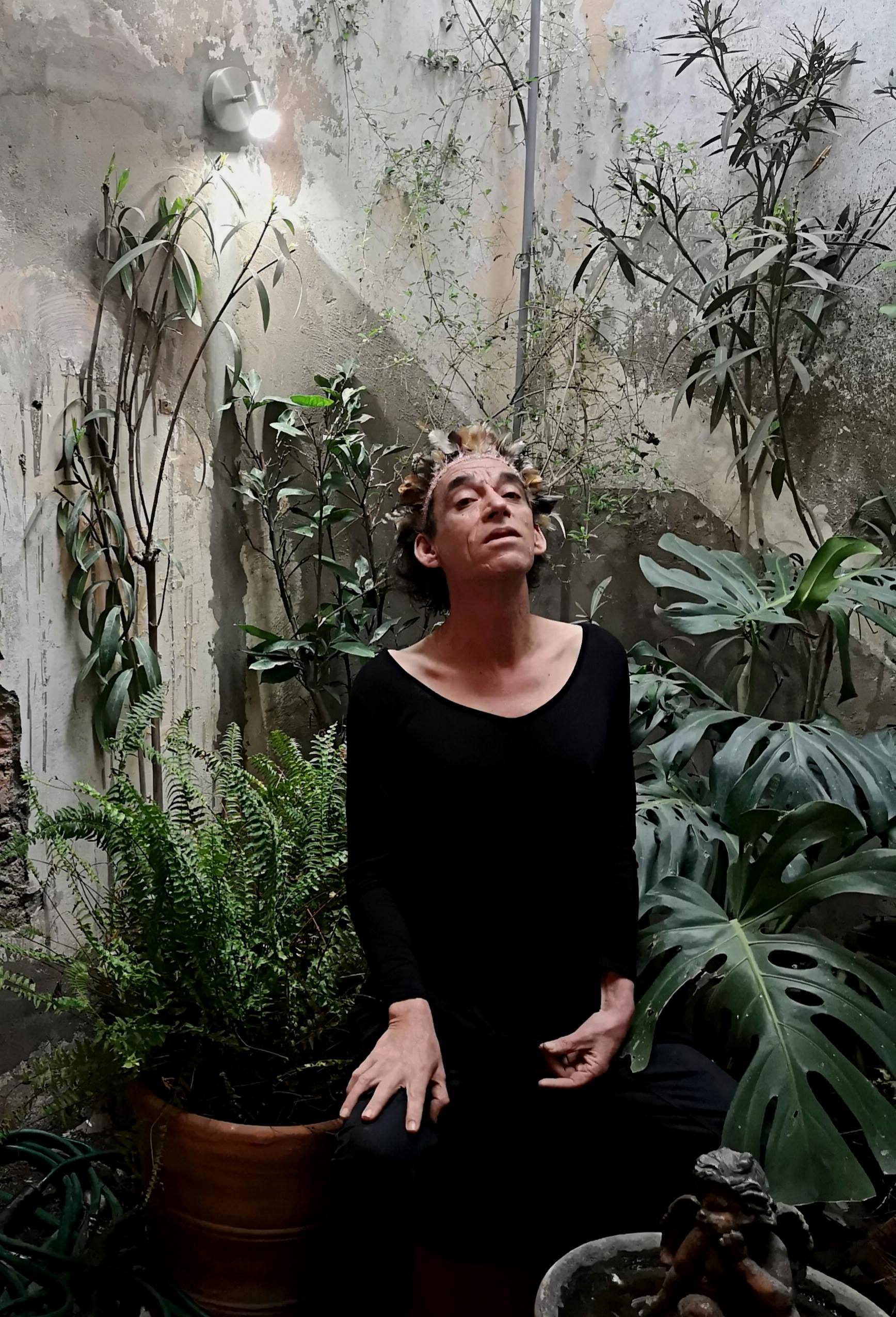
Francisco Casas (Chile, 1959)
A writer and visual artist, he has published the books *Sodoma Mía* (Editorial Cuarto Propio, 1991), the novel *Yo, yegua* (Editorial Seix Barral, 2004), *Romance de la Inmaculada Llanura* (Editorial Cuarto Propio, 2008), and *Romance del Arcano sin Nombre* (Editorial Chancacazo, 2009).
In 1986, together with writer Pedro Lemebel, he founded the art collective “Las Yeguas del Apocalipsis” (“The Mares of the Apocalypse”), developing an extensive body of work centered on performance art. Their collaborative practice employed cross-dressing, photography, video, and installation as combative mediums. Through more than a hundred public interventions, they championed the causes of memory, sexuality, and human rights. In doing so—grounded in the reality of the homosexual experience—they became one of the most significant disruptions to the institutional discourses of the dictatorship of that era.
He has been invited to participate as an artist, writer, and speaker at various universities and institutions across the Americas and Europe, including New York University, the National Autonomous University of Mexico (UNAM), the Wifredo Lam Center in Havana, and the Latin American Institute of Culture (ILA) in Rome. He also wrote the screenplay for the short film *The Woman Passage*.
*Pesados Visual*, March 2015.