-
Fundación Proa
Av. Pedro de Mendoza 1929 y Caminito
La Boca, Buenos Aires, Argentina.
(+54-11) 4104-1000
info@proa.org
The building
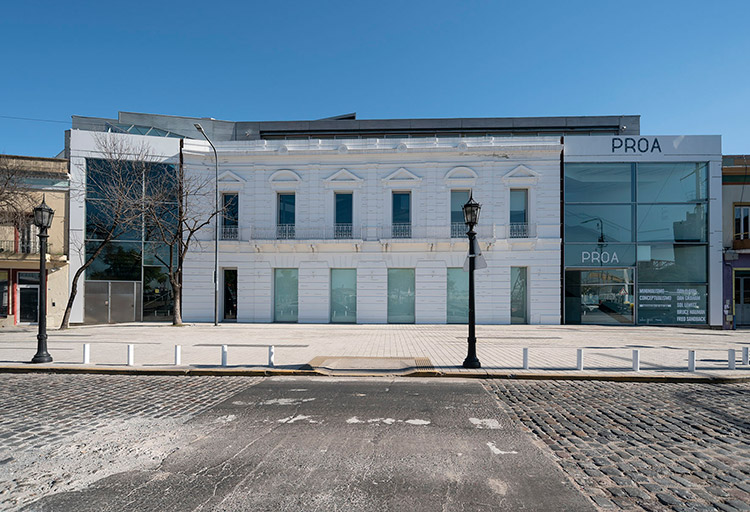
A historical Italian house refurbished at the end of the XIXth Century was the starting point for this center of Contemporary Art. The building itself establishes a dialogue with the surrounding community through its translucid façades, offering a unique landscape of the City. The history of the construction and the town.How to get there
-
Car
Proa is located next to the most famous and traditional street of Buenos Aires, Caminito, in the town of La Boca.
See it in Google Maps. -
Bus
Proa is located next to the most famous and traditional street of Buenos Aires, Caminito, in the town of La Boca.
Check out how to get here in this link..
Buses that take you near Caminito (in a 10-square radius): 10, 22, 24, 39, 54, 70, 74, 86, 93, 98,102, 129, 159, 186
Along Pedro de Mendoza Avenue: 20, 25, 29, 33, 46, 53, 64, 152
Along Brandsen Avenue: 25, 46, 86
Along Alte. Brown Avenue: 29, 53, 152, 64
Along Patricios Avenue: 22, 24,39, 70, 93
From Av. 9 de julio: 29, 70, 64, 86, 8, 24, 10, 39
-
From Train Stations
Retiro: 20, 33, 93, 152, 70, 22
Constitución: 53, 46, 39, 70, 29, 102, 168, 10, 25 -
Bike
Proa is located next to the most famous and traditional street of Buenos Aires, Caminito, in the town of La Boca.
See the bicycle lanes that get you to Fundación Proa in this EcoBici Map link.
You can park your bicycle in Avenida Pedro de Mendoza.
-
100 mts.
Proa is located next to the most famous and traditional street of Buenos Aires, Caminito, in the town of La Boca.
PARKING
Located in Av Pedro de Mendoza.
Less tan 100 mts. from the entrance of Fundación Proa, bewteen Rocha and Quinquela Martín streets.
Bookstore
The Library is open to the public from Wednesday to Sunday 12:00 am – 19:00 pm.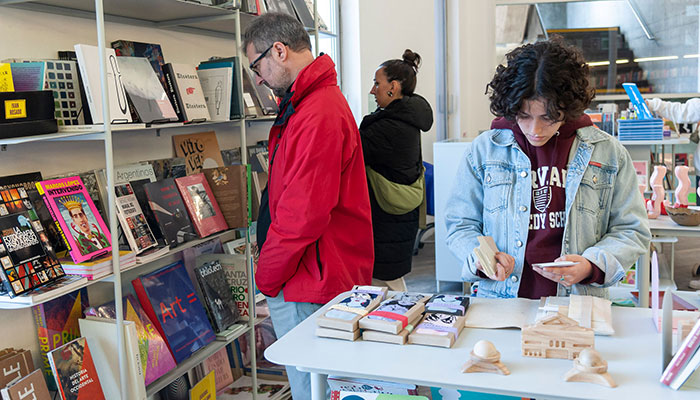
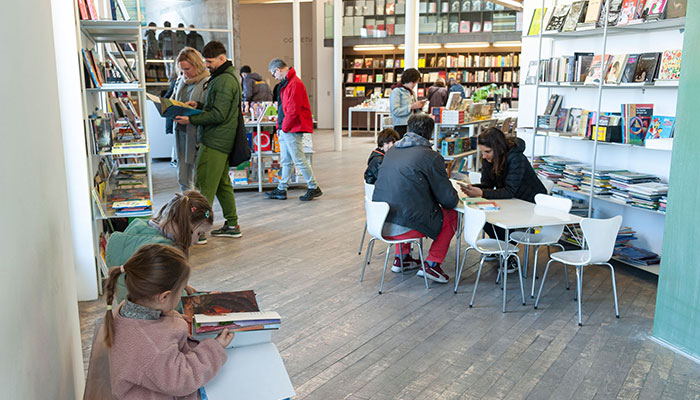
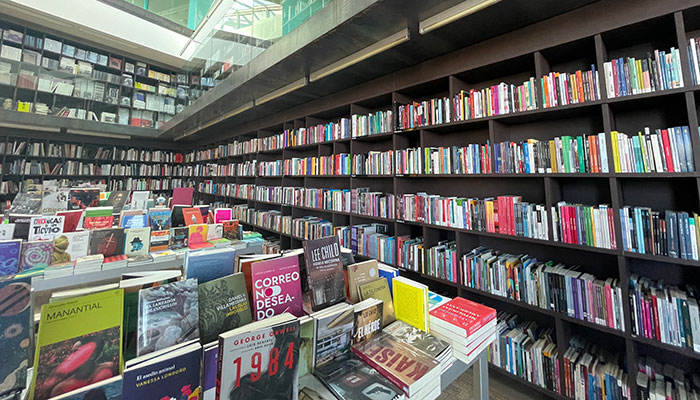
Specialized in Contemporary Art and in independent publishers, the Bookstore offers more tan 9000 titles (books, magazines and catalogues). The list includes artists’, collectors’ and de luxe editions, fanzines and experimental interdisciplinary publications that establish an open and constant dialogue with Proa’s exhibitions and activities. +info
PROA Cafe
The Café and terrace are open from Wednesday to Sundays 12am - 19pm.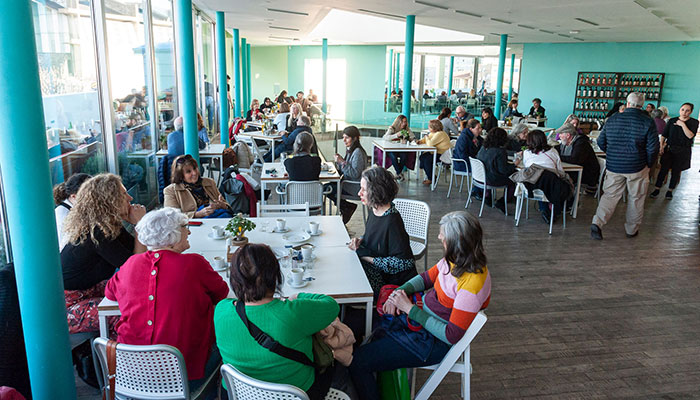
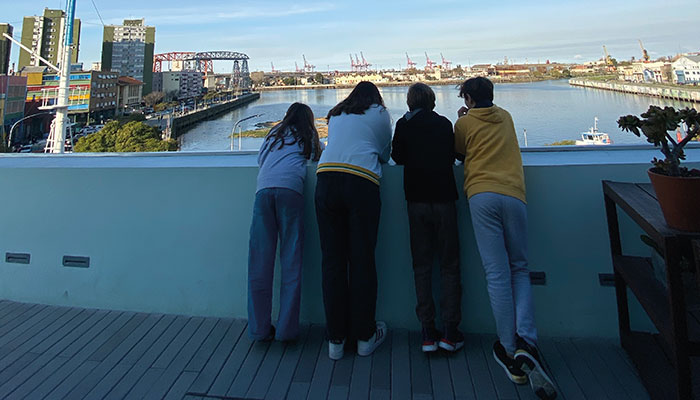
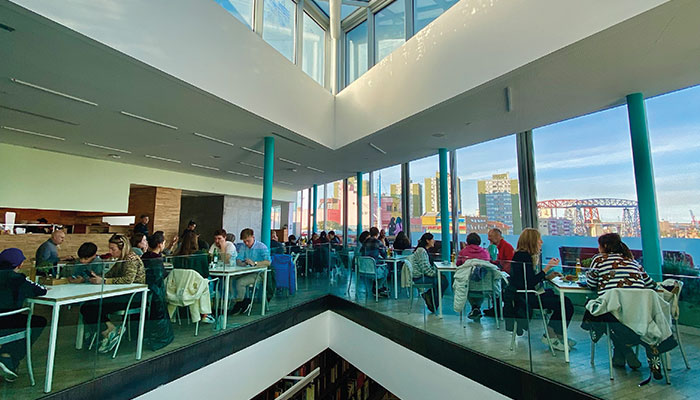
Due to the new protocols it is necessary to reserve your table of up to four people in advance.
Bookings:
Mail: cafeteria@proa.org / Tel: 41041003